Start your research with high quality human induced pluripotent stem cells (hiPSCs)
Ready-to-use iPSCs from Applied StemCell accelerate your studies with quality reagents
Episomal reprogramming and morphology-based selection preserves purity by reducing sources of heterogeneity
Reprogrammed from fibroblasts from a male, African American donor
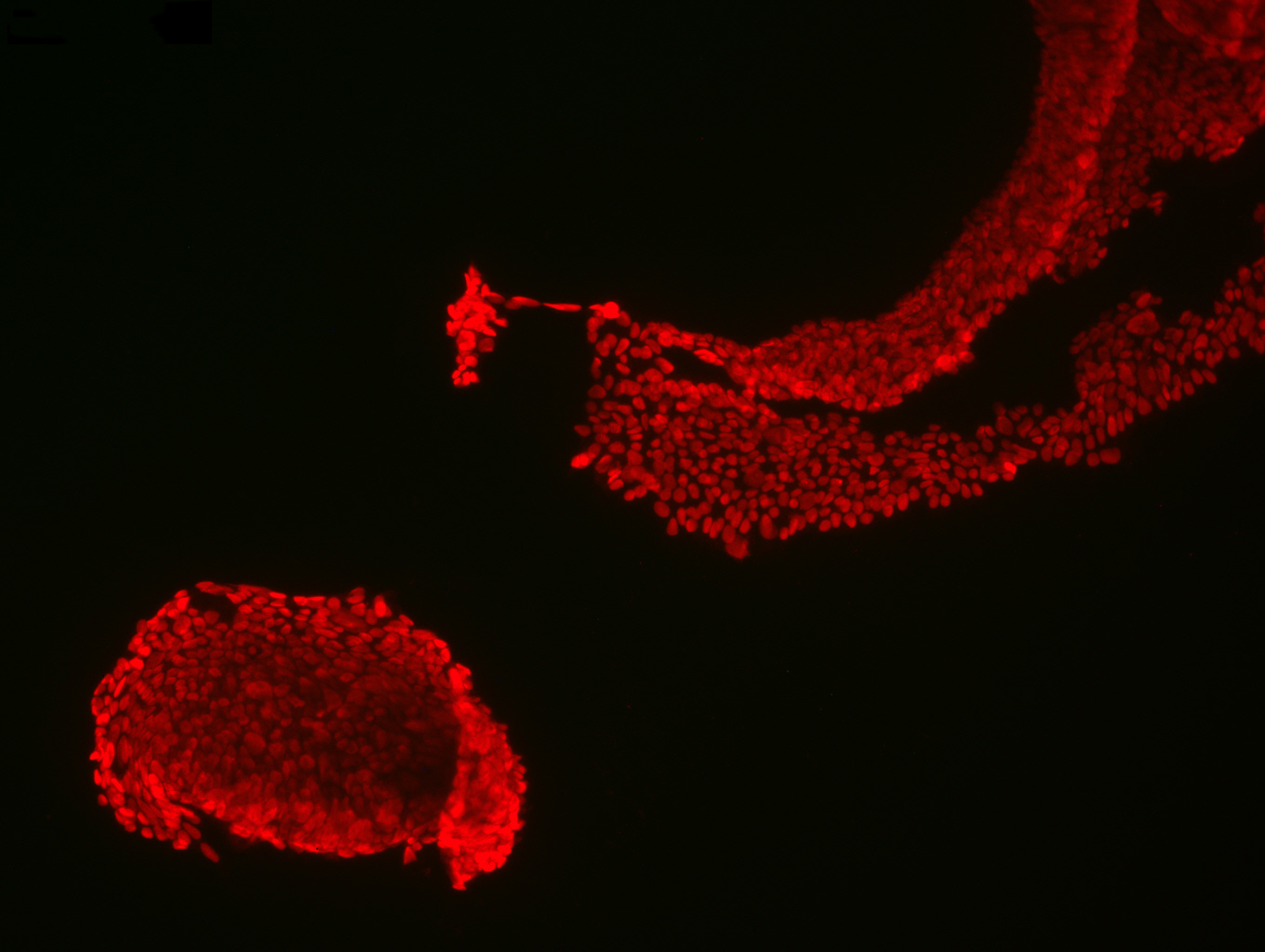
Pluripotency confirmed through OCT4, SOX2, SSEA4, TRA-1-60, and TRA-1-81, and alkaline phosphatase (AP)
Overview
Applied StemCell offers high-quality hiPSCs (ASE-9211), generated from normal human skin fibroblasts using episomal reprogramming methods. This transient reprogramming approach utilizes human transcription factors (OCT4, SOX2, KLF4, and c-MYC) to initiate the reprogramming process without integrating foreign DNA into the genome. The iPSCs are selected based on precise morphological criteria, eliminating the need for fluorescent markers or drug-based selection, ensuring their purity and natural state.Each order of ASE-9211 contains one vial of 0.5 x 10⁶ cells.
How it works
The ASE–9211 cell line is user-friendly, offering a seamless blend of safety, flexibility, and reliability.
1. Thaw and expand ASE-9211.
Prepare Matrigel® or Geltrex-coated plates and thaw mTeSR-plus medium with Rock Inhibitor and Primocin.
Plate the cells into prepared wells and evenly distribute clumps for uniform growth.
Monitor colonies for attachment and stability; change the medium as needed.
2. Passaging human iPSCs
Detach cells using a 0.5 mM EDTA solution.
Replate cells into freshly coated wells, ensuring colonies remain intact.
Incubate under appropriate conditions.
3. Cryopreserving human iPSCs
Detach colonies with EDTA and resuspend them in freezing medium.
Transfer the suspension to labeled cryovials and store at -80°C overnight in a CoolCell® Freezing Container. Move cryovials to liquid nitrogen the next day for long-term storage.
Are these iPSCs compatible with CRISPR/Cas9 editing?
Yes, our ASE–9211 iPSC line is optimized for CRISPR/Cas9 editing, making it ideal for genetic studies and functional genomics.
What protocols are included for handling these iPSCs?
We provide detailed protocols for thawing, feeder-free culturing, and cryopreservation, ensuring ease of use for your research team.
How are these iPSCs verified for pluripotency?
Each batch is tested for pluripotency markers (OCT4, SOX2, SSEA4, TRA-1-60, TRA-1-81) and alkaline phosphatase (AP) activity, alongside verification of a normal male karyotype to ensure purity and stability.
What is the passage number and cell count per vial?
Each vial of the product is at P17 with 0.5 million cells / vial.
Ready to learn more?
Fill out the contact form below and a team member will be in touch within one business day.
Contact form
We use cookies to ensure that we give you the best experience on our website. If you continue to use this site we will assume that you are happy with it.