

Why now is the time to consider developing a cell therapy
Hypoimmunogenic iPSC technology is opening the door to scalable, cost-effective cell-based medicines
While autologous cell therapies have made great strides in treating certain blood cancers, the approach is logistically complex, expensive, and not scalable, as it relies on isolating cells from the patient, engineering the cells ex vivo, and infusing the engineered cells back into the patient. This complexity also renders the approach unsuitable for the sickest patients, who may run out of time while their treatment is being manufactured.
Allogeneic approaches—where cells from one donor can be used in multiple patients—are a more economical and scalable modality. But for allogeneic therapies to become more widespread, we need to overcome the challenge of transplant rejection. Without engineering cells to be invisible to the host immune system, allogeneic cells will be quickly cleared from the body, rendering them ineffective.
“The single most daunting obstacle currently defying the success of allogeneic cell therapy is immune rejection and our struggle to overcome this immune barrier.”1
Genome engineering for hypoimmunogenicity
This challenge of transplant rejection raises the question, “How do you make a cell invisible to the immune system?”
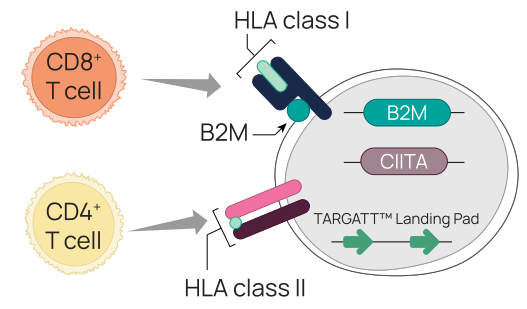
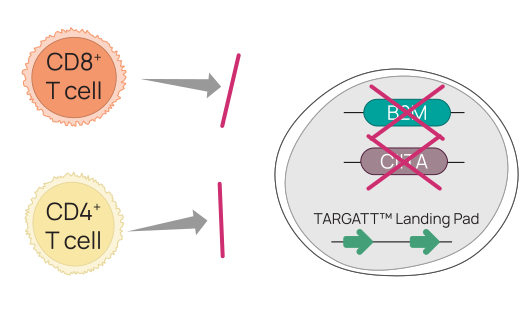
Advances over the past few years have started to provide answers2–7, with promising results seen by simultaneously knocking out the beta-2-microglublin (B2M) and class II transactivator (CTIIA) genes—to eliminate cell surface expression of class I and class II HLA proteins and, thus, elimination by CD8+ and CD4+ T cells (Figure 1)—and knocking in additional elements to ensure persistence, such as the non-classical HLA 1b molecule HLA-F to prevent elimination by NK cells.
These successful studies are why we believe that the time to consider allogeneic cell therapies as a viability modality is now.
Accelerate your cell therapy development by starting with gene knock-in-ready hypoimmunogenic iPSCs.
Figure 1. Generating TARGATT™ hypoimmunogenic iPSCs. (Top panel) Wildtype TARGATT™ iPSCs express the B2M and CIITA genes and include a TARGATT™ landing pad. The B2M protein anchors HLA class I molecules, which are recognized by CD8+ T cells. CIITA controls the expression of HLA class II molecules, which are recognized by CD4+ T cells.
(Bottom panel) Knocking out the B2M and CIITA genes eliminates surface expression of HLA class I and class II molecules.
Need more information about our hypoimmunogenic cells or TARGATT™ technology?
Fill out the contact form below and a team member will be in touch within one business day.
Contact form
References
1. Deuse T, Schrepfer S. Progress and challenges in developing allogeneic cell therapies. Cell Stem Cell. 2025;32(4):513-528. doi:10.1016/j.stem.2025.03.004
2. Hu X, Gattis C, Olroyd AG, et al. Human hypoimmune primary pancreatic islets avoid rejection and autoimmunity and alleviate diabetes in allogeneic humanized mice. Sci Transl Med. 2023;15(691):eadg5794. doi:10.1126/scitranslmed.adg5794
3. Deuse T, Tediashvili G, Hu X, et al. Hypoimmune induced pluripotent stem cell–derived cell therapeutics treat cardiovascular and pulmonary diseases in immunocompetent allogeneic mice. Proc Natl Acad Sci. 2021;118(28):e2022091118. doi:10.1073/pnas.2022091118
4. Gravina A, Tediashvili G, Rajalingam R, et al. Protection of cell therapeutics from antibody-mediated killing by CD64 overexpression. Nat Biotechnol. 2023;41(5):717-727. doi:10.1038/s41587-022-01540-7
5. Hu X, White K, Olroyd AG, et al. Hypoimmune induced pluripotent stem cells survive long term in fully immunocompetent, allogeneic rhesus macaques. Nat Biotechnol. 2024;42(3):413-423. doi:10.1038/s41587-023-01784-x
6. Hu X, White K, Young C, et al. Hypoimmune islets achieve insulin independence after allogeneic transplantation in a fully immunocompetent non-human primate. Cell Stem Cell. 2024;31(3):334-340.e5. doi:10.1016/j.stem.2024.02.001
7. Tsuneyoshi N, Hosoya T, Takeno Y, et al. Hypoimmunogenic human iPSCs expressing HLA-G, PD-L1, and PD-L2 evade innate and adaptive immunity. Stem Cell Res Ther. 2024;15(1):193. doi:10.1186/s13287-024-03810-4