
Beyond HLA Knockout: Why Next-Generation Hypoimmune iPSCs Need a Multi-Layer Approach
Educational blog | Applied StemCell | AST-9750™ / TARGATT™
Allogeneic cell therapies have the potential to transform how advanced cell therapies are developed and delivered. Instead of manufacturing a personalized product for each patient, developers can potentially create standardized, scalable cell therapies from a common starting cell source.
Induced pluripotent stem cells (iPSCs) are particularly attractive for this approach because they can be extensively expanded, genetically engineered and differentiated into multiple therapeutically relevant cell types.
But there is a fundamental challenge: How can cells derived from one donor survive when administered to genetically different recipients?
The answer is driving growing interest in hypoimmune iPSCs—engineered cells designed to reduce immune recognition and clearance. However, creating a hypoimmune cell is more complex than simply removing HLA expression. Multiple components of the immune system can recognize and eliminate transplanted cells. The next generation of hypoimmune engineering therefore requires a multi-layer strategy.[1–5]
What Are Hypoimmune iPSCs?
Hypoimmune iPSCs are genetically engineered pluripotent stem cells designed to reduce their susceptibility to immune recognition and rejection. The objective is particularly important for allogeneic cell therapy, where a standardized iPSC starting cell could potentially be expanded, engineered and differentiated to generate therapeutic cells for multiple patients.[1,2]
Potential applications include iPSC-derived:
- Natural killer (NK) cells
- T cells
- Macrophages
- Cardiomyocytes
- Pancreatic cells
- Neuronal cells
- Endothelial cells
- Other regenerative medicine and cell therapy applications
The potential advantage is significant: instead of manufacturing a unique cell product for every patient, developers may be able to establish scalable, characterized cell banks that support an off-the-shelf therapeutic model. The challenge is overcoming the recipient’s immune response.
Why Is HLA Important in Allogeneic Cell Therapy?
Human leukocyte antigen (HLA) molecules help the immune system distinguish the body’s own cells from foreign cells. HLA Class I molecules are central to interactions with CD8+ cytotoxic T cells, while HLA Class II molecules participate in immune recognition involving CD4+ helper T cells. When transplanted cells express HLA molecules that differ from those of the recipient, the immune system can recognize the cells as foreign and initiate an immune response.[1–4]
For this reason, one common strategy for engineering hypoimmune cells is to disrupt genes involved in HLA expression.
B2M and CIITA Knockout: Building the Hypoimmune Foundation
B2M Knockout
Beta-2-microglobulin (B2M) is required for normal surface expression of classical HLA Class I molecules. Disrupting B2M can substantially reduce HLA Class I surface expression and therefore reduce an important pathway of CD8+ T-cell recognition.[1–3]
CIITA Knockout
Class II major histocompatibility complex transactivator (CIITA) is a major regulator of HLA Class II expression. Disrupting CIITA can therefore reduce HLA Class II-mediated immune recognition.[1–3]
Together, B2M and CIITA knockout provide an important foundation for hypoimmune engineering. But reducing HLA expression does not eliminate every mechanism of immune rejection. In fact, it can create another challenge.
The Missing-Self Problem: Why HLA Knockout Alone May Not Be Enough
Natural killer cells provide another layer of immune surveillance. Unlike conventional T cells, NK cells can become activated when they encounter cells with abnormally low levels of HLA Class I. This phenomenon is commonly described as “missing-self” recognition.[1,3,4]
That creates an important engineering challenge: reducing HLA Class I expression may decrease T-cell recognition, but the same modification can potentially increase susceptibility to NK-cell-mediated killing. This illustrates why hypoimmune engineering cannot necessarily be treated as a single-pathway problem.
Four Immune Barriers to Consider
A useful framework for designing next-generation hypoimmune cells is to consider at least four major immune challenges:
- T-cell recognition — foreign HLA molecules can activate adaptive immune responses.
- NK-cell activity — loss of conventional HLA expression can trigger missing-self recognition and NK-cell-mediated killing.
- Macrophage and myeloid responses — innate immune cells can contribute to recognition, inflammation and clearance of transplanted cells.
- Cytotoxic killing mechanisms — activated T cells and NK cells can use mechanisms including granzyme-mediated cytotoxicity to eliminate target cells.
Addressing these pathways may require a combination of gene knockouts and targeted introduction of immune-modulatory genes.[1,3,5]
Moving Toward Multi-Layer Immune-Evasion Engineering
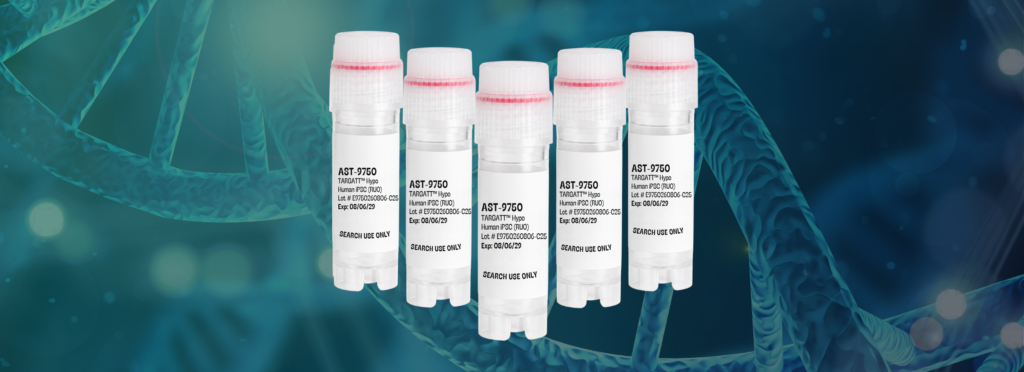
Applied StemCell is developing AST-9750, a Research Use Only hypoimmune human iPSC platform designed around this multi-layer concept. Rather than relying exclusively on HLA reduction, AST-9750 combines two targeted knockouts—B2M and CIITA—with five complementary immune-modulatory knock-ins: HLA-F-B2M, HLA-G-B2M, CD200, CCL21 and SERPINB9.
The objective is to create a starting platform designed to address multiple mechanisms involved in allogeneic immune recognition and clearance. These modifications should be described as design elements intended to address complementary immune pathways; AST-9750-specific functional immune-evasion claims should be tied to the corresponding experimental data.
Non-Classical HLA Signaling
HLA-F-B2M and HLA-G-B2M are incorporated as part of a strategy intended to address innate immune responses associated with reduced conventional HLA expression, including NK-cell activity. Non-classical HLA molecules have been investigated more broadly as potential approaches to mitigating NK-cell responses in HLA-engineered cells.[3–5]
Myeloid and Immune Modulation
CD200 provides an additional immunoregulatory mechanism relevant to interactions with myeloid immune cells. CCL21 adds another dimension intended to influence immune-cell recruitment and the local immune environment. These elements illustrate the broader concept of engineering multiple immune pathways rather than relying on HLA reduction alone.[5]
Cytotoxic Resistance
SERPINB9 is an endogenous inhibitor of granzyme B, a cytotoxic protease used by cytotoxic T lymphocytes and NK cells. Its inclusion provides an additional design element intended to address granzyme-mediated cytotoxicity.[6]
Together, these modifications create a 2-knockout + 5-knock-in architecture designed to investigate multi-mechanism immune evasion.
Why Starting With an Engineered Chassis Matter
The value of a pre-engineered hypoimmune iPSC is not simply the number of genetic modifications it contains. It is the development work that researchers may no longer need to perform themselves.
Building a complex hypoimmune cell platform can require multiple rounds of gene-editing design, cell engineering, clone isolation, screening, characterization, expansion, genomic assessment and functional evaluation. Only after establishing that starting chassis can a development team begin concentrating on the genetic modifications that make its therapeutic product unique.
Instead of asking, “How do we build the immune-evasion chassis?” researchers can begin asking, “What therapeutic functionality do we want to add?”
Hypoimmune Engineering Meets Large-Payload Gene Integration
An immune-evasive cell is rarely the finished therapeutic product. Developers may still need to introduce therapeutic functionality such as chimeric antigen receptors, receptors, cytokines, safety switches, therapeutic genes, reporter systems and multi-gene constructs.
AST-9750 incorporates Applied StemCell’s TARGATT™ site-specific gene-integration platform. TARGATT uses a pre-engineered genomic landing pad at the H11 safe-harbor locus to support targeted, single-copy gene integration and provides a defined route for introducing additional research or therapeutic payloads.[7]
Build immune evasion into the starting cell → retain a defined genomic landing site → introduce the therapeutic payload.
From Cell Line to Therapeutic Platform
Rather than treating hypoimmune iPSCs simply as engineered cell lines, they can be viewed as development chassis for building differentiated allogeneic cell therapies. The broader objective is to combine pluripotency, immune engineering, precise gene integration and therapeutic differentiation within a flexible development platform.
For allogeneic cell therapy developers, that could mean spending less time constructing the underlying cell chassis and more time evaluating the biology that differentiates their therapeutic program.
The Future of Hypoimmune iPSC Engineering
The field is rapidly moving beyond simple HLA disruption. Reducing T-cell recognition remains important, but successful allogeneic cell therapies may also need strategies addressing NK-cell activity, innate immune responses, macrophage-mediated clearance and cytotoxic killing.[1–5]
The next generation of hypoimmune iPSC platforms will therefore increasingly be defined not by a single genetic modification, but by how multiple complementary immune-evasion mechanisms are engineered together—and how easily developers can add their own therapeutic functionality afterward.
AST-9750 represents Applied StemCell’s approach to exploring this next generation of multi-layer immune engineering: 2 knockouts. 5 complementary knock-ins. A defined TARGATT™ integration site. One starting platform for exploring the next generation of allogeneic cell therapies.
Frequently Asked Questions
What is a hypoimmune iPSC?
A hypoimmune iPSC is an induced pluripotent stem cell genetically engineered to reduce immune recognition and rejection. These cells are being investigated as starting materials for allogeneic cell therapies.
Why are B2M and CIITA knocked out in hypoimmune cells?
B2M knockout reduces conventional HLA Class I surface expression, while CIITA knockout reduces HLA Class II expression. Together, these modifications can reduce important pathways of T-cell-mediated immune recognition.
Why isn’t HLA knockout alone sufficient?
Reducing HLA Class I expression can decrease T-cell recognition but may simultaneously make cells more susceptible to NK-cell missing-self recognition. Other immune mechanisms can also contribute to cell clearance.
What is AST-9750?
AST-9750 is Applied StemCell’s Research Use Only engineered hypoimmune human iPSC platform combining B2M and CIITA knockout with five complementary immune-modulatory knock-ins: HLA-F-B2M, HLA-G-B2M, CD200, CCL21 and SERPINB9.
What makes AST-9750 different from a basic HLA-knockout iPSC?
AST-9750 is designed around a multi-layer immune-evasion strategy rather than HLA reduction alone. Its 2-KO + 5-KI architecture is intended to address multiple mechanisms associated with adaptive and innate immune recognition and cytotoxic killing.
Can additional genes be inserted into AST-9750?
AST-9750 incorporates Applied StemCell’s TARGATT™ gene-integration platform, providing a defined genomic landing site for subsequent site-specific integration of research or therapeutic payloads.
References
1. Deuse T, Hu X, Gravina A, et al. Hypoimmunogenic derivatives of induced pluripotent stem cells evade immune rejection in fully immunocompetent allogeneic recipients. Nature Biotechnology. 2019.
2. Hu X, White K, Olroyd AG, et al. Hypoimmune induced pluripotent stem cells survive long term in fully immunocompetent, allogeneic rhesus macaques. Nature Biotechnology. 2024.
3. Reviews of universal-donor and hypoimmunogenic iPSC engineering describing B2M/CIITA disruption, NK-cell missing-self responses and complementary immune-evasion strategies.
4. Gornalusse GG, Hirata RK, Funk SE, et al. HLA-E-expressing pluripotent stem cells escape allogeneic responses and lysis by NK cells. Nature Biotechnology. 2017.
5. Recent reviews of multi-gene hypoimmune and immune-cloaking strategies, including non-classical HLA and additional immunomodulatory mechanisms.
6. Jiang L, et al. The biological function of Serpinb9 and Serpinb9-based therapy. Frontiers in Immunology. 2024;15:1422113.
7. Applied StemCell. Generating a Hypoimmune iPSC Line to Enable Allogeneic Therapies. Cytotherapy. 2025;27(5 Suppl):S243.
AST-9750 is for Research Use Only. Not for use in diagnostic or therapeutic procedures.

